The case for fundamental earnings power
The CSG AMC returned +0.41% net in October, compared with −1.72% for the MSCI ACWI. The resulting 2.13 percentage-point advantage narrowed the strategy’s performance gap since inception. More stable long-term funding costs and signs of broader equity-market participation provided a more constructive backdrop for selective stock picking.
For us, the central question remains whether a business can translate demand and competitive strength into growing, durable free cashflow—and whether its valuation leaves adequate compensation for risk. Eli Lilly, Cheniere Energy and Insmed offer different illustrations of that principle. Their investment cases rest on business economics, not on a shared market narrative.
Start with cashflows and valuation
Capital allocation begins with identifying businesses where the prospective cashflows, competitive position and valuation offer an attractive balance of risk and reward. Financing costs and the breadth of market leadership influence what investors are willing to pay. Over time, it is the underlying economics of the business that must justify that price.
A wider set of companies participating in equity-market gains expands the opportunity set. This commentary examines how that change in market conditions intersects with company-specific developments.
Looking beyond the index heavyweights
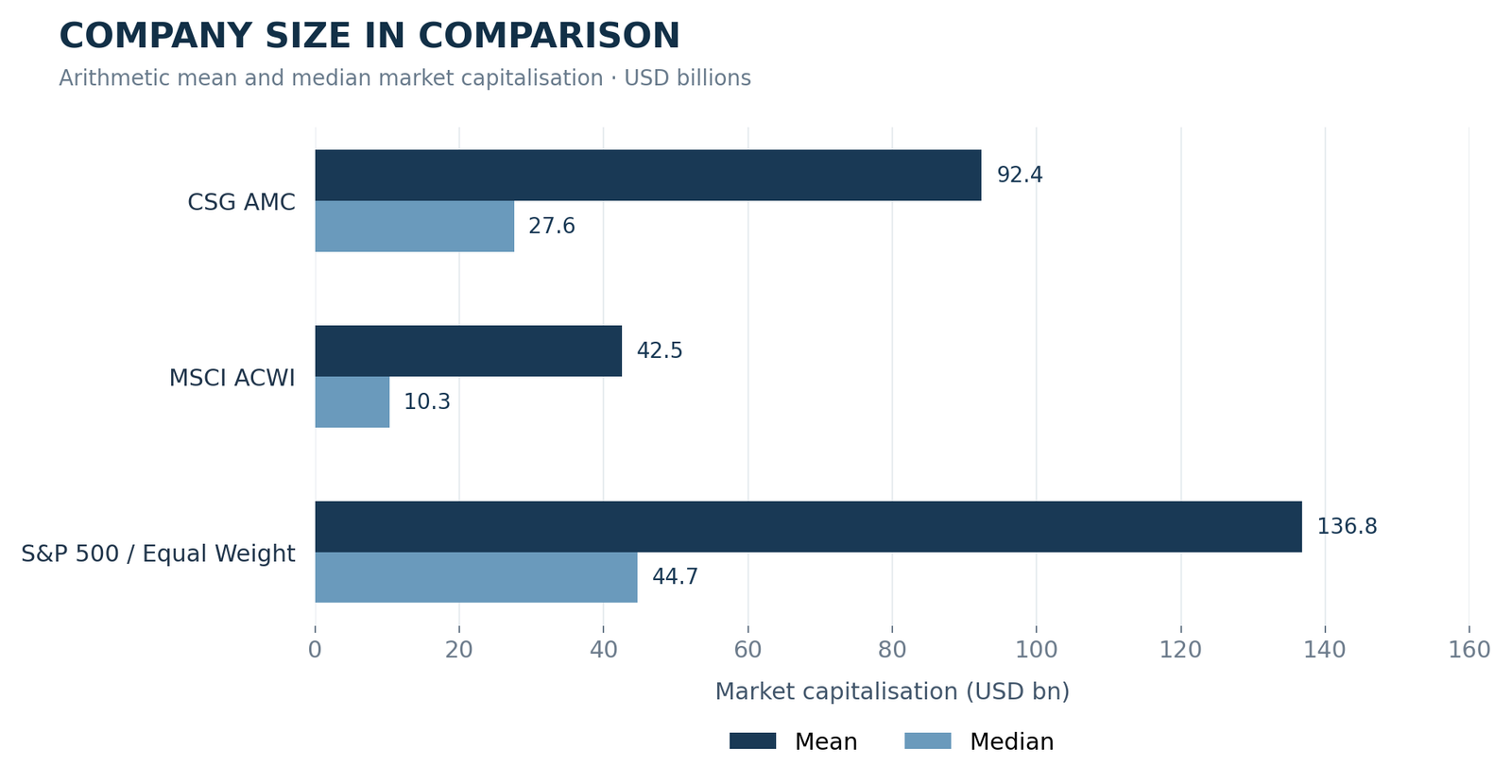
In a market-capitalisation-weighted index, the largest companies have the greatest influence on returns. As their share prices rise, their index weights increase. A handful of mega-cap stocks can therefore determine the direction of the benchmark even when earnings prospects across the wider market are moving quite differently. Comparing a cap-weighted index with an equal-weighted version offers a useful view of market breadth.
For an active manager, the implication is straightforward: a company deserves attention because of the cashflows it can generate, the durability of its advantages, its balance-sheet resilience and the price offered by the market. Opportunity can arise in global leaders and in specialist businesses that sit well outside the largest index constituents.
A relatively small group of large businesses can account for a disproportionate share of index performance. Their earnings and valuations matter particularly.
Each constituent starts with approximately equal weight at rebalancing, making it easier to see whether an advance extends beyond the biggest companies.
Capital follows an independent assessment of cashflow prospects, valuation, risk and asymmetric upside rather than a company’s position in an index.
Recent relative strength in equal-weighted US equities is worth watching as a possible sign of broadening leadership. It is a market signal rather than proof of lasting fundamental improvement—or a reliable timing tool.
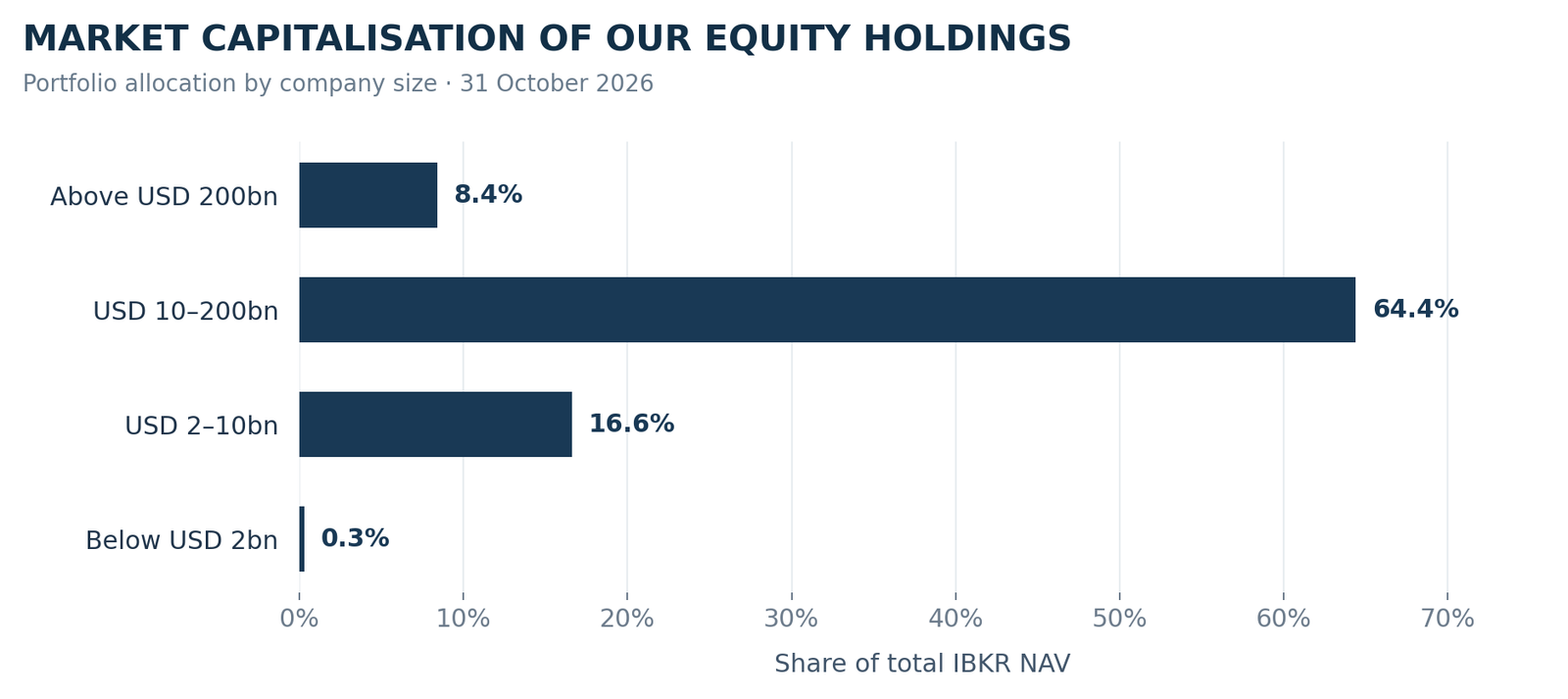
Reading the two measures: Figure 3 uses total portfolio NAV as denominator. When measured against invested equity capital alone, the same market-cap categories represent approximately 9.4%, 71.8%, 18.5% and 0.4%, respectively (rounding differences apply).
Active capital allocation, grounded in independent conviction
We look for businesses with the potential to grow earnings and free cashflow materially over time. The quality of the business model, enduring competitive strengths and a valuation that offers an attractive risk/reward trade-off are the deciding factors.
This approach takes us across the equity universe—from established global leaders to specialist companies whose economic potential is only beginning to appear in reported results.
Our allocation of capital reflects fundamental analysis and investment conviction.
When operating progress becomes visible
Eli Lilly and Cheniere Energy were among the businesses showing notable share-price strength during October, against a backdrop of operational developments and expectations for future cashflow generation. In diagnostics and biopharmaceuticals, the transition from scientific promise to commercial scale is particularly consequential. Share-price changes, however, should not be mistaken for a portfolio attribution statement.
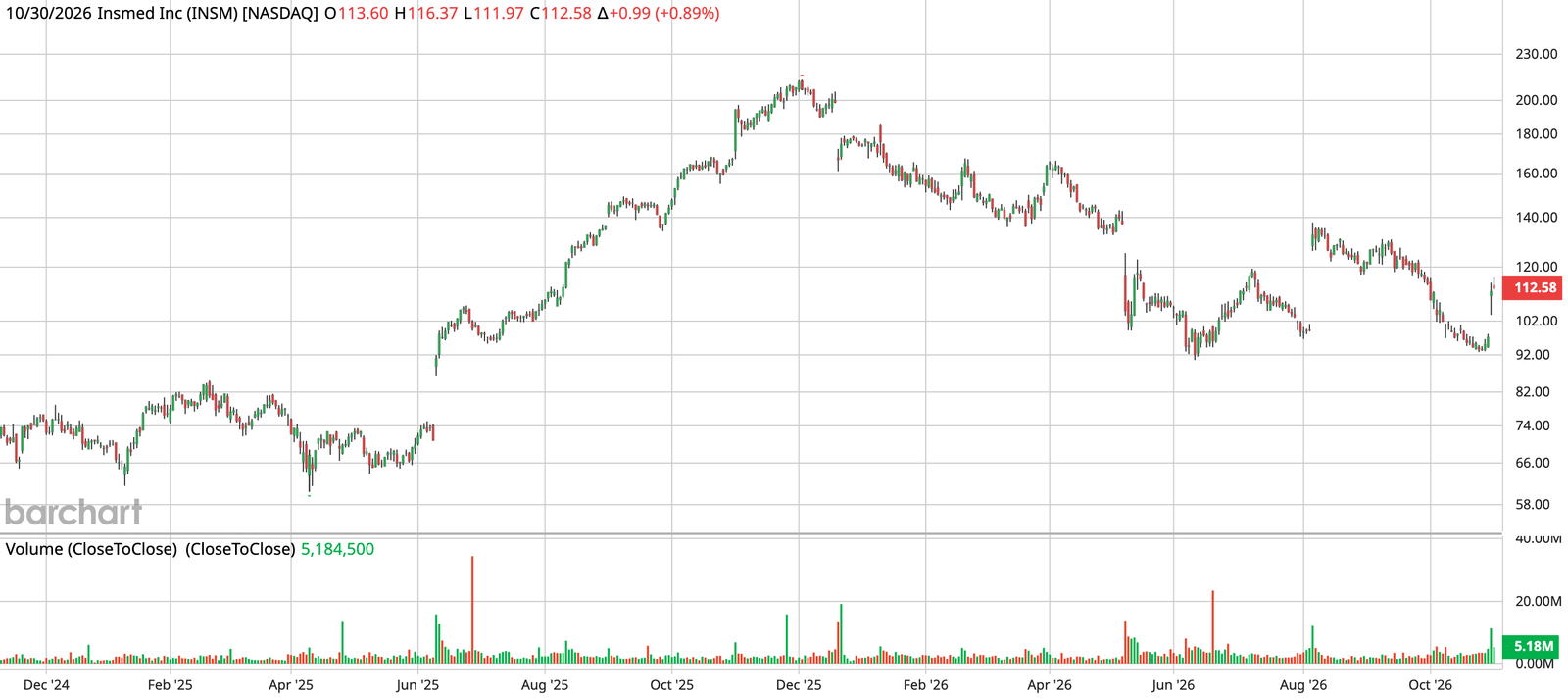
Insmed illustrates the point. Following an earlier surge, the shares experienced a substantial correction. The commercial launch and development of BRINSUPRI, together with the company’s latest results, provided further substance to its growth prospects. The subsequent rebound shows how a reassessment of operating progress can coincide with more supportive valuation conditions. The chart alone cannot establish causality.
Allocating capital when real yields are higher
Stabilisation in long-term capital costs can help companies whose prospective earnings power is improving. It does not dispense with valuation discipline. Financing terms, economic sensitivity and the dependence of some business models on continuous access to capital remain important distinctions.
Our work therefore centres on plausible free-cashflow scenarios, valuation, operating catalysts and resilience under less favourable conditions. Position sizing also reflects the extent to which seemingly unrelated holdings may share the same underlying risks.
A wider opportunity set
More stable long-term nominal and real interest rates improve the conditions in which operational progress can translate into equity valuations. The relative strength of equal-weighted US indices also suggests that leadership may be extending beyond a narrow group of mega-cap technology companies.
We will continue to assess market breadth alongside energy prices, geopolitical risk, funding conditions and company-level earnings momentum. Our priority remains to distinguish durable improvements in cash generation from changes in market sentiment.
Stable capital costs leave room for fundamental revaluation.
Future cashflow quality, disciplined valuation and deliberate risk-taking remain at the centre of our investment approach.
View latest CSG AMC performance